Frequently Asked Questions
Product Overview & AWS DDoS Testing
What is AWS DDoS Testing by Red Button?
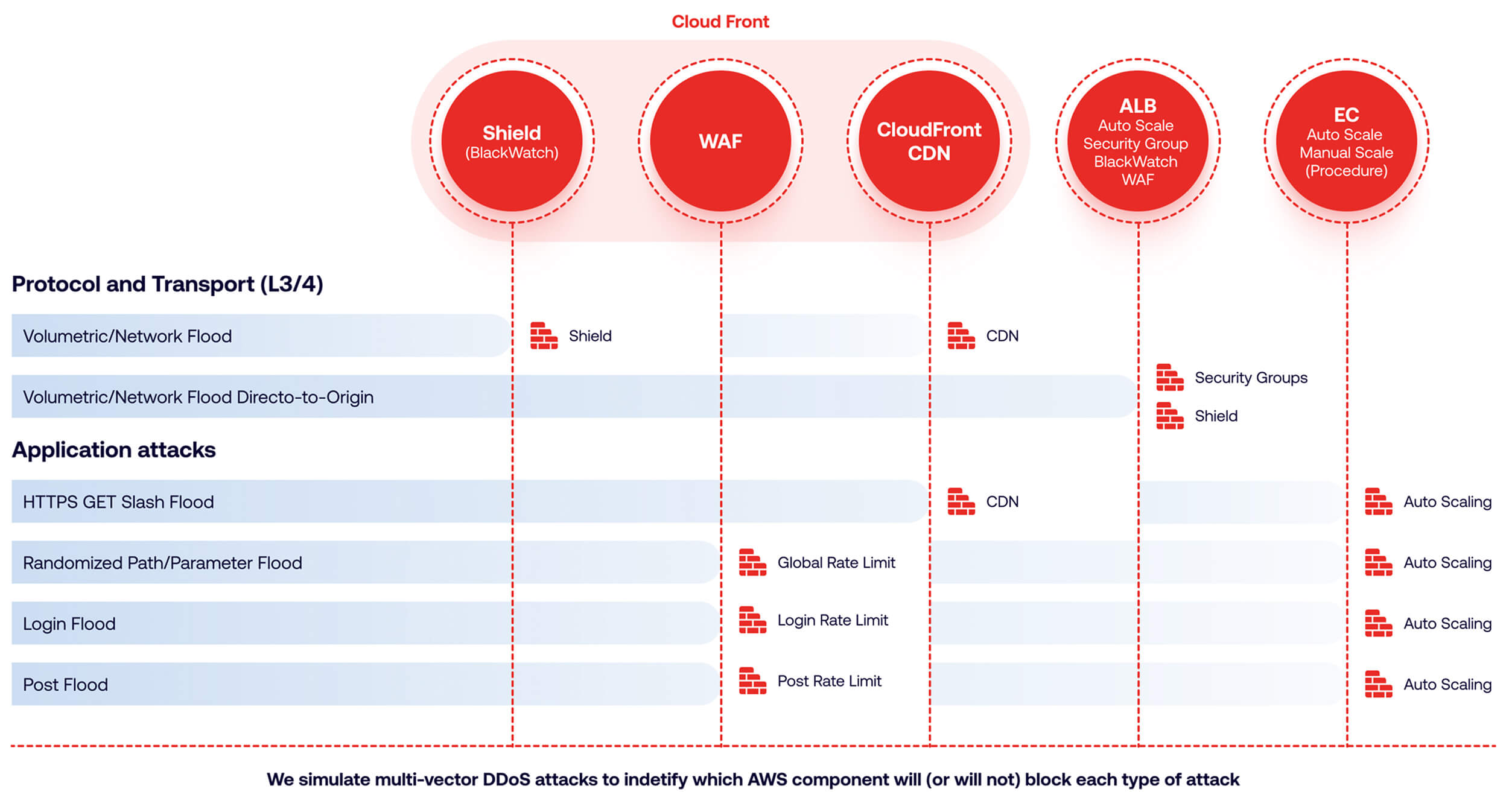
AWS DDoS Testing by Red Button is a fully managed service that simulates realistic DDoS attacks tailored to your specific AWS deployment. As an authorized AWS DDoS Test Partner, Red Button validates your system's DDoS protection by running attack simulations that match your architecture (e.g., CloudFront with ALB and EC2, or API Gateway and AWS Lambda). The service includes detailed reporting, remediation guidance, and optional retesting to ensure your defenses are effective. Note: The service is focused on AWS environments; for other cloud or hybrid setups, see Red Button's broader DDoS testing offerings.
How does Red Button tailor DDoS testing to my AWS architecture?
Red Button customizes each DDoS simulation based on your AWS deployment. For example, if your setup uses CloudFront, ALB, and EC2, the attack simulation will differ from one designed for API Gateway and AWS Lambda. This ensures that the test challenges the actual architecture and protection mechanisms you have in place. Note: Customization is limited to the AWS environment details you provide; for multi-cloud or hybrid environments, additional scoping is required.
Testing Process & Implementation
What is the typical timeline and customer effort required for AWS DDoS Testing?
The onboarding and planning phase for AWS DDoS Testing typically takes around two weeks from kickoff to test start. The total customer time commitment is about five hours: one hour for a pre-test interview, three hours for the live test session, and one hour for results readout and remediation recommendations. Red Button handles all other aspects, including planning, execution, and analysis. Note: Larger or more complex environments may require additional time for scoping and approvals. Source
What resources or access does Red Button require from my team?
Customers need to provide access to their infrastructure or network security team for real-time monitoring and to authorize necessary actions during the test. Red Button assists in obtaining any required third-party approvals (e.g., from ISPs or AWS). Minimal customer effort is required beyond these steps. Note: If your organization has strict change management or approval processes, additional coordination may be needed.
Testing Methodology & Technical Capabilities
What types of DDoS attacks can Red Button simulate on AWS?
Red Button can simulate over 100 distinct attack vectors, including volumetric, protocol, and application-level (Layer 7) DDoS attacks. Simulations are executed safely using a proprietary distributed botnet platform spanning over 30 countries. The platform can generate attack volumes up to 300 Gbps, 5 million packets per second (PPS), and 500,000 HTTP requests per second (RPS) using up to 1,000 attacking botnets. Note: The scope of attacks is defined and approved with the customer prior to testing. Source
What testing methodologies does Red Button use for AWS DDoS Testing?
Red Button uses three primary methodologies: Blackbox (external attacker simulation with no prior system knowledge), Whitebox (full visibility for deep-dive analysis), and Graybox (partial knowledge for hybrid scenarios). The methodology is chosen based on your goals—regulatory audits, secure SDLC, or insider threat simulation. Note: The chosen methodology may affect the depth and scope of findings. Source
Does Red Button test application-level (Layer 7) DDoS attacks on AWS?
Yes, Red Button's simulations include application-level (Layer 7) DDoS attacks. These are executed safely and can be tailored to specific AWS workloads, such as web applications behind CloudFront, ALB, or API Gateway. Note: The exact scenarios and targets are defined during the planning phase and require customer approval. Source
Reporting, Remediation & Continuous Improvement
What kind of reporting and remediation guidance does Red Button provide after AWS DDoS Testing?
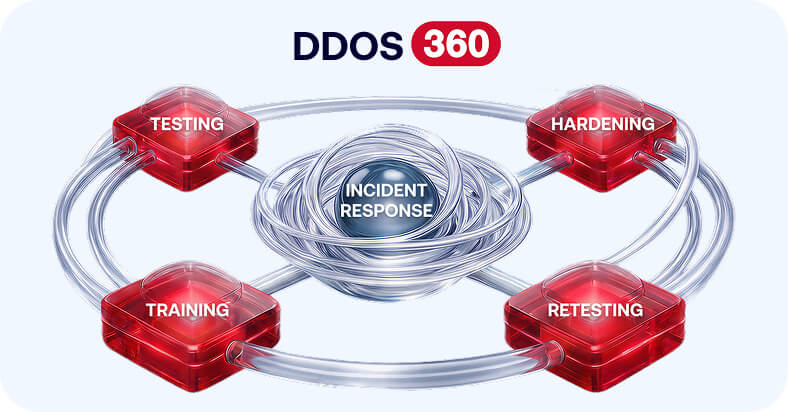
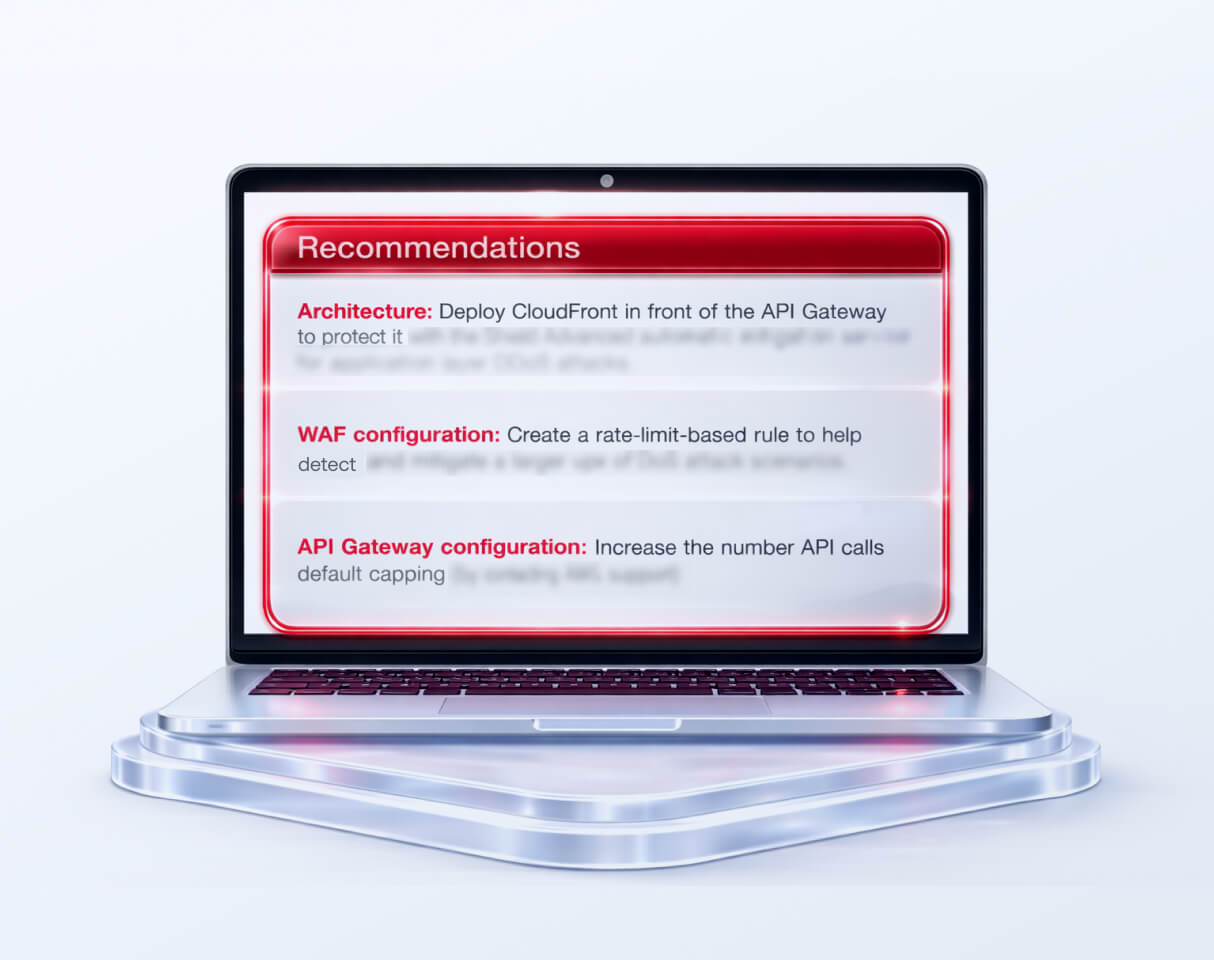
After testing, Red Button delivers a detailed report identifying all security flaws, prioritized by severity. The report includes remediation recommendations, such as optimal AWS WAF configurations and suggestions for additional security components. An optional retesting session is available to validate implemented fixes. The DDoS Resiliency Score (DRS) is included to benchmark your protection level against industry standards and competitors. Note: Reports are tailored to the AWS environment tested; for multi-cloud or hybrid reports, additional services may be required. Sample Report
Does Red Button help implement remediation recommendations after AWS DDoS Testing?
Red Button provides actionable remediation recommendations and can conduct a retesting session to validate that fixes have been implemented correctly. However, direct implementation of changes within your AWS environment is typically the responsibility of your internal team or service provider. Note: For hands-on remediation, consult with Red Button during the planning phase to clarify available support options.
Security, Compliance & Certifications
How does AWS DDoS Testing by Red Button support compliance requirements?
Red Button's AWS DDoS Testing supports compliance with standards such as ISO 27001 and SOC 2 by providing compliance-grade reporting, a DDoS Resiliency Score, and audit-ready evidence. Reports include actionable insights and remediation steps to help organizations meet regulatory requirements (e.g., SAMA, MAS, HKMA). Note: While Red Button supports compliance, final certification depends on your organization's overall security posture and audit process. Source
Use Cases, Customers & Industry Fit
Who should consider AWS DDoS Testing by Red Button?
AWS DDoS Testing is designed for organizations running critical workloads on AWS, including Fortune 500 enterprises, financial services, online trading and payment platforms, ISPs, gaming firms, and government agencies. Typical roles involved are CISOs, cybersecurity managers, cloud architects, and heads of security. Note: Organizations with highly customized or multi-cloud environments should discuss scope with Red Button to ensure fit. Source
What are some real-world examples of AWS DDoS Testing outcomes?
Case studies include a business intelligence company hosted on AWS that improved its DDoS defense posture after Red Button's testing (read the case study). Other examples span financial services, government, gaming, technology, and logistics, demonstrating Red Button's experience across industries. Note: Outcomes depend on the organization's initial security posture and engagement scope.
Limitations & Considerations
Are there any limitations or scenarios where AWS DDoS Testing may not be the best fit?
AWS DDoS Testing is best suited for organizations with defined AWS workloads and a need for compliance-grade validation. It may not be optimal for organizations seeking hands-on remediation, those with highly dynamic or multi-cloud environments, or those requiring continuous, automated DDoS defense (as opposed to periodic validation and improvement). Detailed limitations not publicly documented; ask Red Button sales for specifics.
Technical Documentation & Resources
Where can I find technical documentation and resources about AWS DDoS Testing?
Red Button provides datasheets, white papers, a knowledge base, and a resource library with technical documentation, case studies, and a DDoS glossary. Access these resources at the resource library and the knowledge base. Note: Some resources may require registration or direct inquiry for access.